By Isabel Gareau
“A physician without knowledge of astrology has no right to call [themselves] a physician.”
-Hippocrates
Herbalism is an ancient discipline. Archaeological evidence suggests the intentional application of plants as medicines long before the evolution of Homo sapiens themselves – burial sites across many continents hold fossilized remains of medicinal plants. Scientists have made 1 haste to conclude anachronistically that these plants were used for practical purposes by their bearers, potentially because of their known medicinal impact. These conclusions are made as if such a simple biomedical solution would entirely justify their possession – as if such a reductionist framework would tell the whole story.
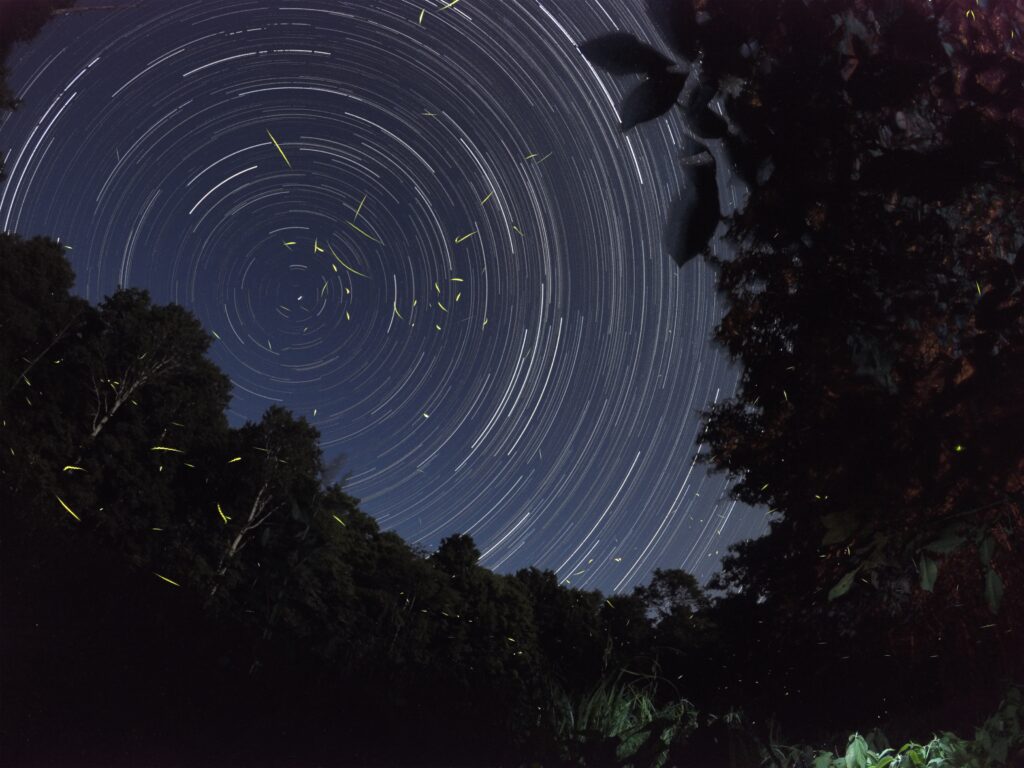
There is a broader scope worth considering, one which takes into account the cosmology of these early peoples. While we may not know the specific intricacies involved in their existential understandings, we can assume they possessed a more animism-oriented worldview than that which we recognize in modernity. From that perspective, one can argue that there is a likelihood these plant medicines contained a certain enchantment for these peoples. They were likely connected to ancient spirituality and ceremonial rites, and most importantly, arose from an earth which was viewed as animate and conscious. They existed in a world where there were not yet artificial separations, and they had a place among a greater celestial network – one which could be clearly viewed as the sun rose and set, and as the moon, stars, and dynamically moving planets became visible each night.
This is a world which Western modernity may popularly fail to recognize, but which bears no less relative truth or significance than it did hundreds of thousands of years ago. This is a world where the anffairs on earth bore observable correspondence to the planets moving through the sky. Even before there was a word invented for it, this relationship held specific responsibility for shaping our worldview, and eventually our science. We knew that as above, so must be below. We eventually came to call that correspondence astrology.
It is only reasonable then to see how the development of medicine as a discipline arose in this context. Human anatomy was understood as a macrocosm of our broader universe, the intricacies of our bodily system a reflection of the complexity of our solar system. Plants and other natural substances, used to change the bodily ecosystem, could be categorized in that same universe. Fiery herbs could be added to cold and stagnant systems, while demulcent, cooling herbs could be used to soothe constitutions prone to chronic inflammation. Understanding and relating these plants to the archetypally relevant planetary spheres was paramount to interpreting their medicinal impact. The astrological premise to medicine, and to herbalism specifically, awaited a careful observer to understand its nuance, notice the patterns, and apply those principles in order to enact healing.
As the understanding of these patterns grew with the development of civilization, the use of medicinal plants persisted to eras of written record, with documentation of their applications by Egyptian, Sumerian, Chinese, and Indian practitioners for the past five thousand years. These 2 cultures all notoriously exhibit rigorous astrological traditions, many of which are still in practice today. These very same plants were later studied by Hippocrates in Classical Greece, by Nicholas Culpepper in the 18th century, and by contemporary herbalists to this very day. Ayurvedic and Traditional Chinese Medicine (TCM) techniques have continued into the modern era with righteous similarity to their original forms, correlated to the lack of erosion of these culture’s cosmology with the advent of industrialism.
There is an excellent case for continuing to use these methods in modernity, however, particularly as it relates to vitalist herbalism. The system of energetics employed by vitalists, which takes into consideration the temperature and moisture level of certain bodily systems, transposes beautifully onto an astrological framework. Just as Mars expresses warm and irritating energetics, initiating some reactive force within us, so does Nettle (a Mars-ruled plant!) cause histamine reactions when applied to the skin, encouraging blood flow to that area and promoting healing of tissue. Both Mars and Nettle are necessary irritations – things which propel us into action, bringing life force to times of stuckness or strife.
Astroherbalism – the name for the intersection of astrology and herbal medicine – provides a framework for understanding herbs that we can also apply to our understanding of someone’s health outcomes as told by their birth chart. There is a component of someone’s vital force that is detailed in the nativity, and bringing that element into an herbal consultation can have innumerable benefits to the tailoring of remedy specifically for the patterns that are present. We have the opportunity as herbalists to have detailed and intimate insight into our client’s health outcomes as told by their birth chart and natal transits, and adding that perspective to our consideration of energetics can provide a layer of depth and richness that is not otherwise accessible.
The fact remains that herbalism was not always the empirical practice widely practiced today, and it existed and continues to exist in a myriad of complex magical and mythological contexts beyond the confines of Western scientific frameworks. Through investigation of the astrological origins of herbalism, we can assess how to effectively apply these esoteric principles to our contemporary herbal practice, honoring both the cultural origins of herbalism as well as the evidence-based medicine we have access to in the modern era. This approach can give us a more meaningful and spiritual context for plant medicine, one which helps to re-enchant our universe and connect us to higher purposes within our work as herbalists. More importantly, it supports our approach to making medicine tailored specifically to the magical and unique person in front of us – a person as unique as their birth time, with rich astrological details to tell the tale.
Join me on Sunday, February 8th at 2:00pm at the Colorado School of Clinical Herbalism for Astroherbalism: Planetary and Personal Herbal Medicine, as we explore the practical application of astrology to herbal medicine.
Sources Cited:
• Jan Lietava, “Medicinal plants in a Middle Paleolithic grave Shanidar iV?,” Journal of Ethnopharmacology 35 (1992): 263-266, https://doi.org/10.1016/0378-8741(92)90023-K
• Dario Radley, “15,000-year-old evidence of medicinal plant use discovered in Morocco’s Taforalt Cave,” Archaeology News Online Magazine, November 5, 2024, https:// archaeologymag.com/2024/11/evidence-of-ancient-medicinal-plant-use-in-morocco
• Ursula Peitner et al., “The iceman’s fungi,” Journal of Mycological Research 102, no. 10 (1998): 1153-1162, https://doi.org/10.1017/S0953756298006546
• Biljana Bauer Petrovska, “Historical review of medicinal plants’ usage,” Pharmacognosy Reviews 6, no. 11 (2012): 1-5, http://doi.org/10.4103/0973-7847.95849